
Kimchi Nabe (pronounced something like a short "nah-bay") is one of our long-time Nabe Party favorites, along with Sukiyaki and Shabu-shabu. We always cook it on a portable gas hob on the low table where everyone can sit around and reach it easily, adding more of each ingredient as the pot empties. Nabe parties are the best for conversation and slow, social eating - and they're always full of vegetables, which makes them healthy (and cheap)!
I don't know enough about cooking to say exactly why, but Kimchi nabe tastes amazing, every time.
(Is that the effect of the Kimchi Umami?)
And don't worry if you can't handle very spicy food - last time I just used less kimchi, and our 2-year-old had no problem!
Kimchi nabe is extremely easy to make, and just about impossible to get it wrong. Most of the time I don't even measure the ingredients.

Kimchi Nabe Recipe (serves 4, just add more veggies and pork to serve up to 6)
100g ~ 400g Kimchi, depending on how hot or mild you like it
300g pork (thinly sliced)
Chinese cabbage
Chives
Enoki Mushrooms (I used Shimeji this time, they're great too!)
Tofu
+/-Moyashi bean sprouts
+/-A bundle of Harusame (Bean thread vermicelli, often used in Vietnamese cooking) soaked in hot water and drained
1~2 tsp garlic
1~2 tsp ginger
1 Tbsp sesame oil
1 Tbsp sake
1 Tbsp miso paste
1 Tbsp ground sesame seeds
2 tsp chicken stock powder
2~3 cups boiling water
1. Season the pork: Using a spoon, scrape out some chilli etc from the kimchi (usually I find some at the top or bottom of the jar) and put it on the pork. Pour the juices from the jar of kimchee onto the pork. Add garlic, ginger and 1/2 Tbsp sesame oil to the pork. Massage it all in with your fingers. Leave the pork to marinate while you prepare the other vegetables and ingredients.

(Now, greet your guests as they've just arrived, and have them sit around the table.)
2. Heat 1/2 Tbsp sesame oil in the nabe (a wok or a frypan is great). Brown the pork, then add sake, ground sesame seeds, kimchi, water, miso paste (dissolve it in) and stock powder. Bring to the boil again, then add some of each of the vegetables and tofu, except for chives. Simmer for a few minutes, then add chives.
3. Make sure that everyone has a bowl of hot steamed rice, a torizara bowl and chopsticks, and then everyone digs in!
4. When the nabe is at least half empty, push the remaining cooked ingredients to one side, then into the open space, place some more of each ingredient.
(Torizara means a small plate or bowl for eating a shared meal. For nabe, the torizara is always a bowl, of course)
The soup is so delicious that you had better have a spoon or ladle ready so that everyone can take some soup together when transferring things to their own bowl.
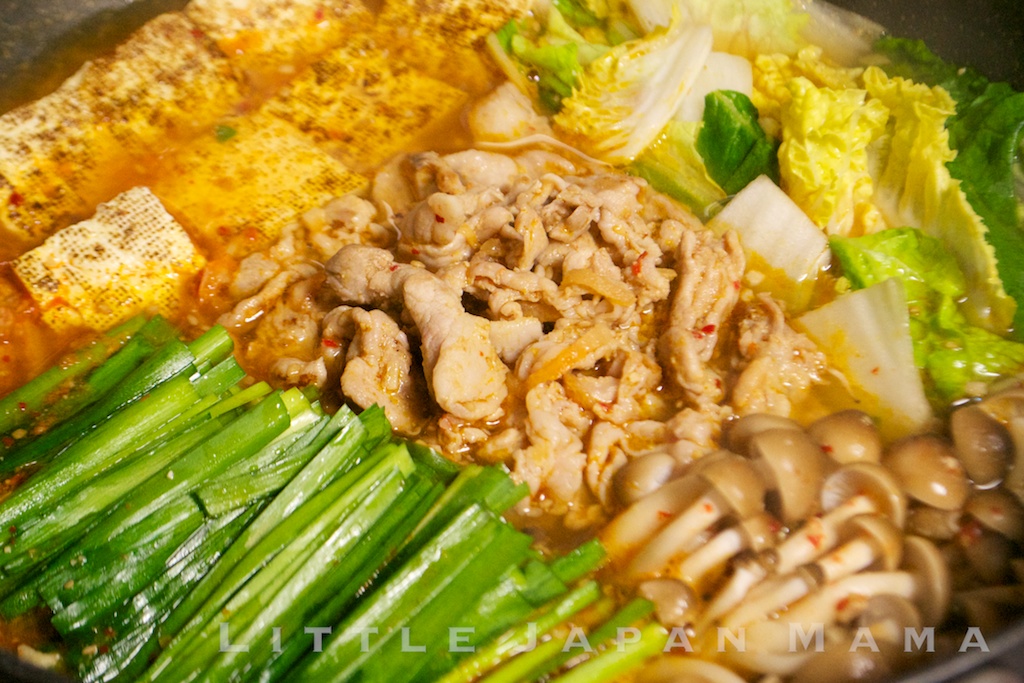
If you have more than 6 people eating, you might consider making two separate nabe, so everyone can reach it easily.
...
Sadly, we had to leave our do-nabe (clay pot) in Australia, so I was too embarrassed to include the frypan in the photos. (恥笑)
...
If you don't have chives, you can substitute shallots.
...
I guess you could say that Kimchi Nabe is the Japanese adaptation of Korean Kimchi Chige?
Happy Nabe Party-ing!


